5 posts tagged with "Cursor"

Cursor editor/AI

View All Tags

Cursor MCP Tools: Give Your AI Coding Agent 10,000+ Real API Tools

· 7 min read
MCPBundles

Here's the thing nobody tells you about Cursor's agent mode: it's brilliant at working with code and completely blind to everything your code talks to.

Last week we were debugging a webhook handler. Cursor had the code open, understood the control flow, spotted a race condition in the retry logic. Genuinely impressive. Then we needed to know whether the bug was actually hitting production — were customers seeing duplicate charges? The agent that just did 15 minutes of sophisticated code analysis couldn't answer a basic factual question about our own Stripe data.

So we opened a browser tab, logged into Stripe, searched for the customer, scrolled through PaymentIntents, compared timestamps manually, went back to Cursor, and typed what we found. The AI had all the context and none of the data.

We got tired of being the copy-paste bridge between our IDE and our dashboards.

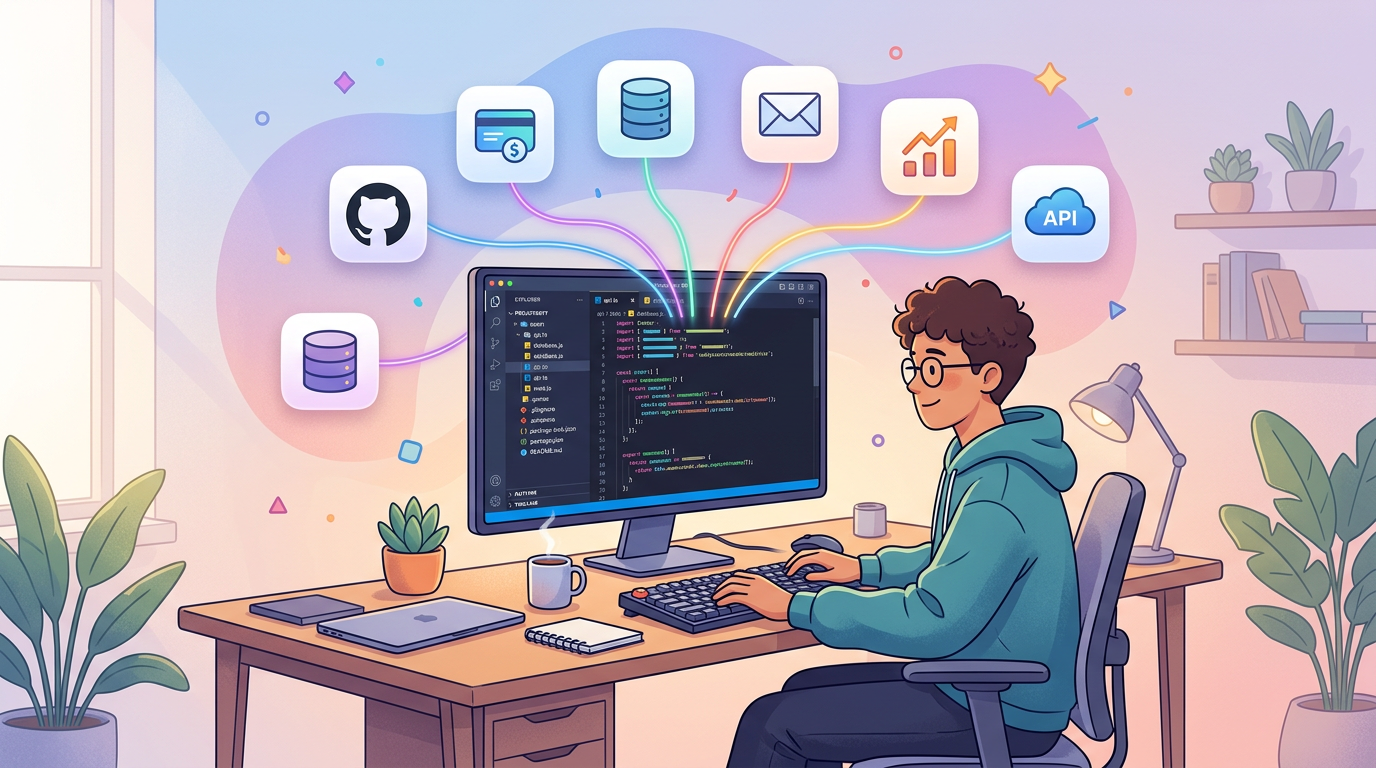
Developer using Cursor with MCP tools connected to production services

MCPBundles CLI: Give Your AI Coding Agent Access to 10,000+ Production Tools

· 6 min read
MCPBundles

MCPBundles has always worked as an MCP server. You add it to Claude Desktop, Cursor, ChatGPT, or any MCP-compatible client, and your AI gets access to Stripe, HubSpot, Postgres, PostHog, Gmail, and every other service you've connected — with real credentials, real permissions, and real data.

The MCPBundles CLI is an alternative way to access those same tools. Instead of configuring MCPBundles as a remote MCP server in your client, you install a command-line tool and authenticate with an API key. The AI agent discovers and calls your tools through shell commands — the same 10,000+ tools, the same credentials, the same workspace permissions.

pip install mcpbundles

MCP Batch Get: Consolidating Tool Retrieval

· 6 min read
MCPBundles

Following our prior post on wiring up an MCP server for our Django app — see How We Integrated Model Context Protocol (MCP) into Our Django App — we went back and revisited the architecture. "Too many tools" is still a huge problem for LLM productivity, which has continued into GPT5 and the latest Claude models so probably won't be solved toon. Cursor and Claude both work better when they have fewer tools to choose from, and our original setup exposed too many single-purpose GET tools. So we consolidated everything into a single, strongly-typed batch tool.

Cartoon illustration of a person consolidating MCP tool retrieval with batch operations, happy expression
Consolidate many single GET tools into one unified batch getter for cleaner schemas, fewer tools, and better client UX.

The result: one get tool, clearer schema, faster concurrent fetches, and less model confusion.